


Why LED Conversion Makes More Financial Sense in 2025 Than It Did in 2010
 Written by Dwayne Kula
Last Updated Nov 18, 2025
Published on Nov 18, 2025
We’ve been working with commercial lighting projects since LED technology first started making sense for warehouses and parking lots. Back in 2010, recommending LED was about being forward-thinking.
Today? It’s just math. Here’s what changed: LED fixtures got significantly more efficient while electricity rates climbed steadily upward. That combination means the gap between what you’re paying to run metal halide or high-pressure sodium and what you’d pay for LED has widened into something that’s honestly hard to ignore if you’re managing a facility budget.
The U.S. Department of Energy confirms that LED lighting technology has continued to improve dramatically, with LED fixtures now achieving efficacies of 150+ lumens per watt compared to metal halide systems that typically deliver only 75-100 lumens per watt. This efficiency improvement, combined with rising commercial electricity rates, creates compelling economics for facility upgrades.
The Efficiency Jump You Probably Didn’t Know About
When LED high bay lights first showed up in warehouses around 2010, most fixtures were delivering somewhere around 100-120 lumens per watt. That beats metal halide, but not by enough to make everyone rush to convert. Early adoption carried steep costs that made many facility managers hesitant to commit.
Fast forward to today. Our high-performance LED fixtures are putting out 190-200 lumens per watt. Standard commercial-grade fixtures? 160-165 lumens per watt as a baseline. Fixture costs have dropped to a fraction of what early adopters paid. What this means in practical terms: identical light output with dramatically less energy than the first LED installations, multiplied across thousands of operating hours annually.
The Electricity Bill Problem Nobody Talks About
While LED technology improved, your electricity rates went the other direction. In 2010, commercial electricity in many markets cost around $0.10 per kWh. Today, most facilities are paying $0.13 to $0.15 per kWh, with some regions paying considerably more. Your lighting system probably runs 10-16 hours per day, maybe more. Every watt consumed gets multiplied across all those hours and billed at these higher rates. Traditional lighting that was expensive in 2010 has become genuinely cost-prohibitive now.
Real Numbers: How a Warehouse Saves Money Converting From 400W Metal Halide

Let me walk through a typical scenario we see all the time. Say you’ve got a warehouse running 50 fixtures with 400-watt metal halide bulbs. Here’s something that surprises people – those 400W bulbs actually consume 460 watts each when you factor in the ballast.
Most facility managers don’t account for ballast consumption when calculating actual energy use. They see the bulb rating and assume that’s what they’re paying for. It’s not. You’re paying for the bulb plus the ballast, and that ballast is pulling 60 watts just to operate the bulb. So when you replace these with 150-watt LED high bay lights, here’s what actually happens:
Energy Consumption Breakdown:
- Current system: 460W x 50 fixtures = 23,000 watts
- LED system: 150W x 50 fixtures = 7,500 watts
- Reduction: 15,500 watts (67% less energy)
Annual Operating Costs (12 hours/day, 365 days/year at $0.13/kWh):
- Metal halide: $261.92 per fixture = $13,096 total
- LED: $85.41 per fixture = $4,270.50 total
- Annual savings: $8,825.50
Important note: Your actual savings will vary based on your specific electricity rate, operating hours, and facility conditions. These calculations use common industry assumptions for comparison purposes. Now let’s look at five years, because that’s where LED conversion stops being “a good idea” and starts being “why didn’t we do this sooner”:
Five-Year Total Cost Comparison:
- Metal halide system: $65,481
- LED system: $21,352.50
- Five-year savings: $44,128.50
ROI timeline for most warehouses? Under 8 months. By the time you’ve had your LED fixtures for a year, they’ve paid for themselves and started putting money back in your operating budget. These calculations represent energy costs only and don’t include installation expenses, potential electrical modifications, or available utility rebates that could improve your ROI timeline. Contact our team for a detailed analysis specific to your facility.
Best Sellers: LED Warehouse Lights
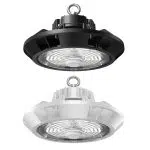
100 / 120 / 150 / 200 Watt Adjustable High Bay
$99.72
Availability:1680 in Stock
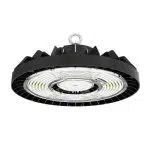
150 / 175 / 200 / 240 Watt Adjustable LED UFO High Bay
$179.64
Availability:177 in Stock

120 / 160 / 200 Watt Adjustable UFO High Bay
$106.21
Availability:1053 in Stock
Parking Lots: The 1000W Metal Halide Reality

Parking lot lighting presents even more dramatic numbers. Many parking lots still run 1000-watt metal halide or high-pressure sodium fixtures. With the ballast, these actually pull 1150 watts each. That’s basically a space heater that also happens to produce light. You’ve probably got 20, 30, maybe 50 of these running every night. Converting to a 300-watt LED parking lot light creates this comparison:
Single Fixture Annual Costs (12 hours/day, 365 days/year at $0.13/kWh):
- Metal halide (1150W): $654.81
- LED (300W): $170.82
- Savings per fixture: $483.99 annually
Scale this across just 20 fixtures – a pretty modest parking lot:
- Annual savings: $9,679.80
- Five-year savings: $48,399
That’s a 74% reduction in energy consumption. In most cases, the LED parking lot fixtures provide better illumination than the old metal halide systems because LEDs maintain consistent output throughout their entire lifespan. Metal halide and high-pressure sodium bulbs start fading from day one. By halfway through their rated life, they’ve already lost half their brightness.
One customer told us their parking lot “looks like daylight now” compared to the high-pressure sodium they replaced. Their monthly electricity bill dropped by over $800, and they eliminated the maintenance schedule they’d been running for years. Previously changing bulbs every few months, now they don’t think about it.
The Illuminating Engineering Society (IES) provides comprehensive guidance on parking lot lighting standards, including recommended illumination levels and uniformity ratios that ensure proper visibility and safety. Many facility managers find that LED conversions not only reduce energy costs but also improve compliance with these professional lighting standards.
Best Sellers: LED Parking Lot Lights

90 / 120 / 150 Watt Adjustable LED Shoebox Area Light
$211.36
Availability:314 in Stock

180 / 240 / 300 Watt Adjustable LED Shoebox
$299.94
Availability:2 in Stock

150 Watt LED Shoebox Area Light
$247.28
Availability:93 in Stock
The Maintenance Savings Everyone Underestimates
Energy savings get all the attention because they show up on your utility bill every month. But maintenance cost reductions deliver the real long-term value, and this consistently surprises people the most. Metal halide bulbs last about 15,000 hours under ideal conditions.
In real-world applications? Most facilities replace them sooner because they lose 50% of their brightness by half-life. Nobody wants a dim warehouse or a half-dark parking lot, so you’re replacing bulbs before they actually burn out just to maintain decent light levels.
Compare that to LED fixtures rated for 50,000+ hours. Some of our commercial LED high bay lights carry ratings of 134,000-170,000 hours. Not projections or theoretical numbers – documented performance from fixtures operating in real facilities.
The Maintenance Math:
Over the 50,000-hour lifespan of a single LED fixture:
- Metal halide requires 3-4 bulb replacements
- Each replacement runs $75-100 (parts plus labor)
- Ballasts typically fail every 5-7 years at $150-200 per replacement (including labor)
For a 20-fixture installation, you’re looking at $4,000-$6,000 in eliminated maintenance costs over the LED lifespan. For a 50-fixture warehouse? $10,000-$15,000 you’re not spending on bulbs, ballasts, and labor. Something that doesn’t show up in financial calculations but matters if you’re managing a facility: every time someone climbs a lift to change a bulb in a 30-foot ceiling, you’ve got risk exposure.
Worker’s comp claims, OSHA considerations, the whole nine yards. LED conversion dramatically reduces how often you’re putting maintenance workers in that situation.
Why Converting Now Actually Beats Converting in 2010
If you converted to LED back in 2010, you made a smart investment. No question about it. But facilities converting today actually have several advantages that those early adopters didn’t:
Higher Efficiency: Today’s LED fixtures deliver 40-60% more lumens per watt than 2010-era technology. More light from less power than was physically possible 15 years ago.
Better Controls: Today’s LED warehouse lights and parking lot fixtures integrate seamlessly with motion sensors and dimming systems. Early LED technology was hit-or-miss with controls – sometimes they’d work, sometimes they wouldn’t, sometimes they’d flicker. Now, you can add a motion sensor and reduce your lighting energy consumption by another 30-50% in areas with intermittent use. It just works.
Proven Track Record: LED fixtures we’re selling today aren’t experimental. Proven performers with documented 10+ year lifespans in actual commercial applications. The uncertainty that came with early adoption? Gone.
Instant-On Performance: Metal halide fixtures need 10-15 minutes to reach full brightness. I’ve watched facility managers stand there waiting for their lights to warm up after a power outage. LEDs are instant. Flip the switch, you’ve got full light. This matters more than it sounds – for safety, security, and getting your facility operational immediately.
Field-Adjustable Features: Many fixtures now include toggle switches for wattage and color temperature adjustment. You can fine-tune performance after installation based on what you’re actually seeing in your space. Try doing that with metal halide or fluorescent lighting. You can’t. You’re stuck with whatever you installed.
Quality LED fixtures should meet both Design Lights Consortium (DLC) standards for energy efficiency and UL safety certifications for electrical components. The DLC Qualified Products List helps facility managers identify fixtures that meet strict energy efficiency requirements, which is often necessary for utility rebate eligibility and ensures optimal performance in commercial applications.
The Electricity Rate Multiplier Nobody Thinks About
Here’s something that often gets missed in these conversations: as electricity rates increase, your LED savings increase proportionally. The calculations I showed earlier use $0.13 per kWh, which is actually below the national average for commercial rates in many regions right now. If your electricity costs $0.15 per kWh – pretty common in the Northeast and California – those 50 warehouse fixtures save you $10,200 annually instead of $8,825. At $0.18 per kWh? You’re saving $12,240 per year.
LED conversion doesn’t just save you money at today’s rates. It insulates you from future rate increases. When your utility company raises rates next year, and then again the year after that, the gap between your LED costs and what you would have paid for traditional lighting keeps growing. Every rate increase makes your LED conversion look smarter.
The Five-Year ROI Picture
Most businesses think in terms of simple payback periods – “when do I get my money back?” But the real value becomes clear when you look at five-year returns:
400W Metal Halide Replacement (50 fixtures):
- Typical investment in LED fixtures: $7,500-10,000
- Five-year energy savings: $44,128
- Five-year maintenance savings: $10,000-15,000
- Total five-year return: 400-600%
1000W Metal Halide Replacement (20 fixtures):
- Typical investment in LED fixtures: $6,000-8,000
- Five-year energy savings: $48,399
- Five-year maintenance savings: $4,000-6,000
- Total five-year return: 650-850%
These ROI calculations are estimates based on typical projects. Your actual return will depend on your specific fixture costs, installation expenses, electricity rates, operating hours, and available utility rebates. We recommend getting a detailed energy analysis for your facility to understand your specific financial benefits. Try finding another capital improvement project with returns like that.
What Happens After Year Five
This is where LED conversion transitions from “good investment” to “why did we ever do it any other way?” Because once you’ve recovered your initial investment – and most facilities do that in under a year – every dollar saved goes straight to your bottom line. Those 50 warehouse fixtures saving $8,825 annually? That continues year after year.
By year 10, you’ve saved over $88,000 in energy costs alone. Add maintenance savings, and you’re approaching $120,000 in total savings from a $10,000 investment. LED parking lot lights rated for 100,000 hours will still be operating reliably 15-20 years after installation. That’s 15-20 years of accumulated savings compared to the constant cycle of bulb and ballast replacements required by traditional technology. Install them and basically forget about them for the next decade and a half.
Making the Numbers Work for Your Specific Facility
Every facility is different. Your electricity rate, operating hours, current fixture types, ceiling heights, and lighting requirements – all variables that affect your specific savings calculation. What works for a 30-foot ceiling warehouse in Texas isn’t the same as what works for a 15-foot facility in Massachusetts. That’s why we provide free, customized lighting plans.
We calculate your actual savings based on your facility’s dimensions, current fixtures, electricity rates, and operating hours. Our commercial lighting specialists create detailed photometric analyses showing exactly what you’ll save and what light levels you’ll achieve. Not generic estimates pulled from a spreadsheet. Based on your specific situation and informed by 25,000+ completed projects across every type of commercial and industrial application you can think of. Warehouses, parking lots, manufacturing facilities, cold storage, you name it.
The Bottom Line
The question isn’t whether LED conversion saves money. We’ve got 15+ years of data showing it does. It’s a function of how much money you’re leaving on the table by continuing to use traditional lighting. Your facilities are running under lights right now, consuming electricity at rates 60-75% higher than necessary. That gets multiplied by every hour those lights burn. Every week you delay costs money that could have been savings. Every month costs more. The best time to convert to LED was probably 2010. The second-best time? Right now.
Want to see what your specific facility would save? Use our LED Savings Calculator or contact our lighting specialists for a complimentary energy analysis and photometric plan.
After 15+ years and 25,000+ projects, we know how to make the numbers work for your situation.
Disclaimer: The savings calculations and ROI timelines presented in this article are based on typical commercial applications and industry-standard assumptions. Actual results will vary based on your specific electricity rates, operating hours, installation costs, fixture selection, available utility rebates, and facility conditions. Installation costs, electrical modifications, and potential downtime are not included in the energy savings calculations provided. We strongly recommend consulting with our lighting specialists for a detailed analysis specific to your facility before making investment decisions. All product specifications and performance data are subject to change. Past performance of LED lighting installations does not guarantee future results.
About The Author
Dwayne Kula is President / Founder of LED Lighting Supply. On any given day, Dwayne is writing content for the site and helps manage the on-going inbound marketing initiatives. He has a software engineering degree and still writes and maintains the software used in the company. When not working, he enjoys spending time with his family, working out, playing golf and traveling.


