


Solar Powered LED Street Lights
By LED Lighting Supply
- Zero electricity costs with 15-20 year fixture lifespan
- 40-60% lower installation costs eliminating trenching and wiring
- Grid-independent operation ensures continuous safety during outages
- USA-based warranty support with DLC Premium certified efficiency


-
 Custom Solar Layout Analysis Based on Geographic Location & Seasonal Sunlight Patterns
-
Proper Fixture Placement for Reliable All-Night Operation
-
Eliminate Trenching Costs & Grid Dependency While Reducing Carbon Footprint


Showing all 12 results
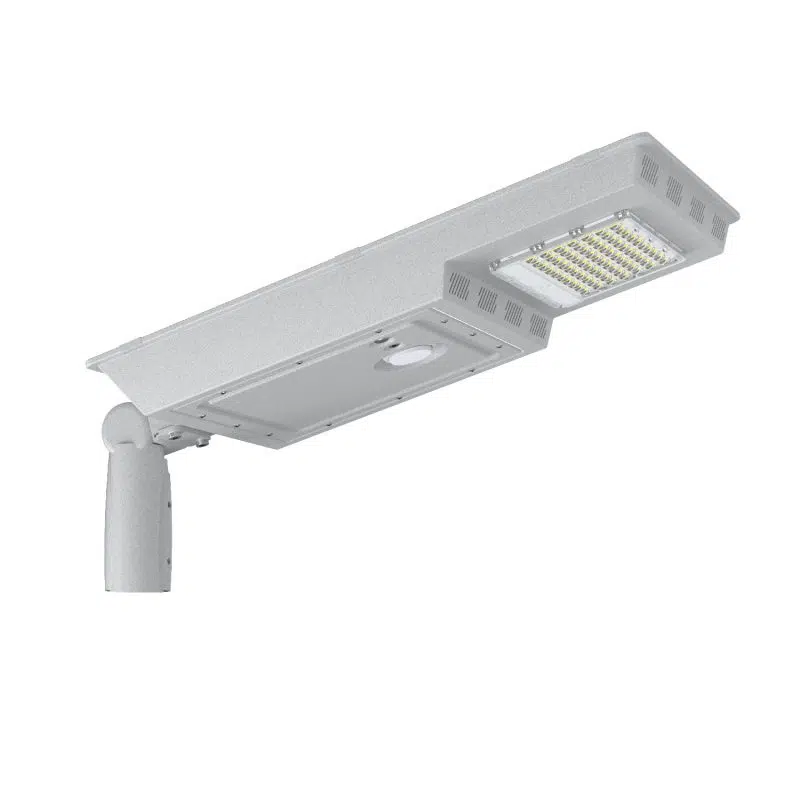 SKU:LLS-IG-SOLAR-25-50-T3 | Web ID:2599Availability:96 In StockShips 7-14 Days
- Watts: 25
- Lumens: 3750
- Lumens/Watt: 150
- Replaces: 100 Watt Metal Halide
- Color Temp: 5000K
- CRI: 80+
- IP Rating: IP65
- Operating Temp: -4°F to 122°F
- Beam Angle: Type 3
- Housing: Galvanized Steel
- Fixture Color: Gray
- Mount: Slip Fitter
- EPA Rating: 2.3
- Dimensions: 26.5 x 16.2 x 3 Inches
- Weight: 22 lbs
Starting At$481.82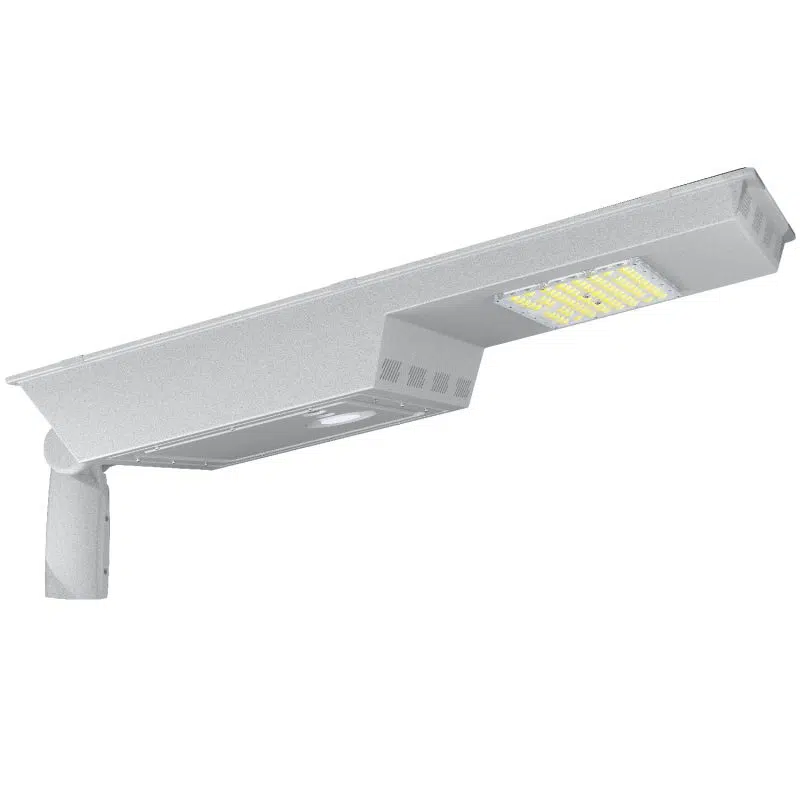 SKU:LLS-IG-SOLAR-45-50-T3 | Web ID:2600Availability:10 In StockShips 7-14 Days
- Watts: 45
- Lumens: 8550
- Lumens/Watt: 190
- Replaces: 250 Watt Metal Halide
- Color Temp: 5000K
- CRI: 80+
- IP Rating: IP65
- Operating Temp: -4°F to 122°F
- Beam Angle: Type 3
- Housing: Galvanized Steel
- Fixture Color: Gray
- Mount: Slip Fitter
- EPA Rating: 2.86
- Dimensions: 33.9 x 16.2 x 4.2 Inches
- Weight: 33 lbs
Starting At$872.73 SKU:MLLG-LN-LED-SOLAR-50-50 | Web ID:1559Availability:106 In StockShips 3-5 Days
- Watts: 50
- Lumens: 5000
- Lumens/Watt: 100
- Replaces: 150 Watt Metal Halide
- Color Temp: 5000K
- CRI: 70+
- IP Rating: IP66
- Operating Temp: -4°F to 122°F
- Rated Life: 50,000 hours
- Dimmable: No
- Beam Angle: Type 3
- Housing: Die-Casting Aluminum Alloy, Anti-Corrosion, Solar Panel mounted on top of fixture
- Fixture Color: Gray
- Mount: Slip Fitter
- EPA Rating: 1.13
- Dimensions: 29.5 X 10 X 4 in
- Weight: 15 lbs
Starting At$470.59 SKU:MLLG-LN-LED-SOLAR-70-50 | Web ID:1692Availability:25 In StockShips 3-5 Days
- Watts: 70
- Lumens: 7000
- Lumens/Watt: 100
- Replaces: 250 Watt Metal Halide
- Color Temp: 5000K
- CRI: 70+
- IP Rating: IP66
- Operating Temp: -4°F to 122°F
- Rated Life: 50,000 hours
- Dimmable: No
- Beam Angle: Type 3
- Housing: Die-Casting Aluminum Alloy, Anti-Corrosion, Solar Panel mounted on top of fixture
- Fixture Color: Gray
- Mount: Slip Fitter
- EPA Rating: 1.13
- Dimensions: 29.5 in L X 10 in W X 4 in H
- Weight: 27 lbs
Starting At$576.92 SKU:MLLG-AG-LED-SLH-40-40-T3 | Web ID:1963Minimum Order:10+Built to Order 12 Weeks
- Watts: 40
- Lumens: 8000
- Lumens/Watt: 200
- Replaces: 250 Watt Metal Halide
- Color Temp: 4000K
- CRI: 70+
- IP Rating: IP65
- Operating Temp: 0°F to 122°F
- Rated Life: 100,000 (L70) hours
- Dimmable: No
- Beam Angle: Type 3
- Optics: Polycarbonate
- Housing: Aluminum Alloy | Monocrystalline Solar Panel
- Mount: Slip Fitter
- EPA Rating: 1.8
- Dimensions: 48.2 X 16.6 X 10 in
- Weight: 36 lbs
Starting At$981.79 SKU:MLLG-AG-LED-SLH-60-40-T3 | Web ID:1964Minimum Order:10+Built to Order 12 Weeks
- Watts: 60
- Lumens: 12000
- Lumens/Watt: 200
- Replaces: 250 Watt Metal Halide
- Color Temp: 4000K
- CRI: 70+
- IP Rating: IP65
- Operating Temp: 0°F to 122°F
- Rated Life: 100,000 (L70) hours
- Dimmable: No
- Beam Angle: Type 3
- Optics: Polycarbonate
- Housing: Aluminum Alloy | Monocrystalline Solar Panel
- Mount: Slip Fitter
- EPA Rating: 1.8
- Dimensions: 55 in L X 16.61 in W X 10 in H
- Weight: 44 lbs
Starting At$1,108.30- SKU:MLLG-AG-LED-SLH-80-40-T3 | Web ID:1965Minimum Order:10+Built to Order 12 Weeks
- Watts: 80
- Lumens: 16000
- Lumens/Watt: 200
- Replaces: 400 Watt Metal Halide
- Color Temp: 4000K
- CRI: 70+
- IP Rating: IP65
- Operating Temp: 0°F to 122°F
- Rated Life: 100,000 (L70) hours
- Dimmable: No
- Beam Angle: Type 3
- Optics: Polycarbonate
- Housing: Aluminum Alloy | Monocrystalline Solar Panel
- Mount: Slip Fitter
- EPA Rating: 1.8
- Dimensions: 55 in L X 16.61 in W X 10 in H
- Weight: 48 lbs
Starting At$1,220.75  SKU:MLLG-AG-LED-SLH-100-40-T3 | Web ID:1966Minimum Order:10+Built to Order 12 Weeks
- Watts: 100
- Lumens: 20000
- Lumens/Watt: 200
- Replaces: 400 Watt Metal Halide
- Color Temp: 4000K
- CRI: 70+
- IP Rating: IP65
- Operating Temp: 0°F to 122°F
- Rated Life: 100,000 (L70) hours
- Dimmable: No
- Beam Angle: Type 3
- Optics: Polycarbonate
- Housing: Aluminum Alloy | Monocrystalline Solar Panel
- Mount: Slip Fitter
- EPA Rating: 1.8
- Dimensions: 60 in L X 16.61 in W X 10 in H
- Weight: 53 lbs
Starting At$1,333.21- SKU:LLS-AG-SLH-AC-40-40-T3 | Web ID:2320Minimum Order:10+Built to Order 12 Weeks
- Watts: 40
- Lumens: 8000
- Lumens/Watt: 200
- Replaces: 250 Watt Metal Halide
- Color Temp: 4000K
- CRI: 70+
- IP Rating: IP65
- Voltage: 100V-277V
- Operating Temp: 0°F to 122°F
- Rated Life: 100,000 (L70) hours
- Dimmable: No
- Beam Angle: Type 3
- Optics: Polycarbonate
- Housing: Aluminum Alloy | Monocrystalline Solar Panel
- Mount: Slip Fitter
- EPA Rating: 1.8
- Dimensions: 48.2 X 16.6 X 10 in
- Weight: 36.4 lbs
Starting At$1,111.35 - SKU:LLS-AG-SLH-AC-60-40-T3 | Web ID:2319Minimum Order:10+Built to Order 12 Weeks
- Watts: 60
- Lumens: 12000
- Lumens/Watt: 200
- Replaces: 250 Watt Metal Halide
- Color Temp: 4000K
- CRI: 70+
- IP Rating: IP65
- Voltage: 100V-277V
- Operating Temp: 0°F to 122°F
- Rated Life: 100,000 (L70) hours
- Dimmable: No
- Beam Angle: Type 3
- Optics: Polycarbonate
- Housing: Aluminum Alloy | Monocrystalline Solar Panel
- Mount: Slip Fitter
- EPA Rating: 1.8
- Dimensions: 55 X 16.6 X 10 in
- Weight: 44 lbs
Starting At$1,246.80 - SKU:LLS-AG-SLH-AC-80-40-T3 | Web ID:2318Minimum Order:10+Built to Order 12 Weeks
- Watts: 80
- Lumens: 16000
- Lumens/Watt: 200
- Replaces: 400 Watt Metal Halide
- Color Temp: 4000K
- CRI: 70+
- IP Rating: IP65
- Voltage: 100V-277V
- Operating Temp: 0°F to 122°F
- Rated Life: 100,000 (L70) hours
- Dimmable: No
- Beam Angle: Type 3
- Optics: Polycarbonate
- Housing: Aluminum Alloy | Monocrystalline Solar Panel
- Mount: Slip Fitter
- EPA Rating: 1.8
- Dimensions: 55 X 16.6 X 10 in
- Weight: 48 lbs
Starting At$1,344.33 - SKU:LLS-AG-SLH-AC-100-40-T3 | Web ID:2317Minimum Order:10+Built to Order 12 Weeks
- Watts: 100
- Lumens: 20000
- Lumens/Watt: 200
- Replaces: 400 Watt Metal Halide
- Color Temp: 4000K
- CRI: 70+
- IP Rating: IP65
- Voltage: 100V-277V
- Operating Temp: 0°F to 122°F
- Rated Life: 100,000 (L70) hours
- Dimmable: No
- Beam Angle: Type 3
- Optics: Polycarbonate
- Housing: Aluminum Alloy | Monocrystalline Solar Panel
- Mount: Slip Fitter
- EPA Rating: 1.8
- Dimensions: 60 X 16.6 X 10 in
- Weight: 53 lbs
Starting At$1,490.62
Understanding How Commercial LED Solar Street Lights Work
Our customers frequently ask about the technology behind commercial solar streetlights, and LED Lighting Supply's expertise in outdoor lighting solutions helps us explain this straightforward yet sophisticated system. Commercial solar lighting systems harness energy through photovoltaic (PV) panels that convert sunlight into electrical power during daylight hours. We engineer these systems with panels mounted either directly onto the lighting structure or integrated with the fixture itself for optimal efficiency.
When sunlight strikes the solar panels, electrons are extracted from photons and converted into DC power, which gets stored in high-capacity rechargeable batteries. At dusk, an integrated light sensor automatically activates the LED light source. Dawn triggers the sensor to shut off illumination and restart the charging cycle. Our most advanced models incorporate motion sensors that provide full brightness when movement is detected, then dim to save energy during inactive periods, extending operational time by up to 35%.
Key Advantages of LED Solar Powered Street Lighting Solutions
With over 15 years of experience in commercial lighting projects, we've found that facilities using solar-powered street lighting experience significant operational and financial benefits:
| Zero Ongoing Electricity Costs | Fixtures operate fully off-grid, eliminating utility expenses entirely. Ideal for remote industrial sites and commercial properties without existing electrical infrastructure. |
| Lower Installation Costs | Trenching and conduit runs are unnecessary, cutting installation expenses by 40–60%. Municipal and industrial projects gain faster deployment with fewer site disruptions. |
| Reliable Operation During Outages | Grid-independent systems maintain illumination during power failures, preserving safety and security for warehouses, logistics yards, and public facilities. |
| Incentive-Eligible Technology | Federal, state, and utility incentives commonly reduce project costs by 25–30%. Our Product Specialists help maximize rebate opportunities for commercial and municipal deployments. |
| Ideal for Remote Industrial Sites | Mining operations, oil and gas facilities, and utility substations benefit from off-grid lighting where electrical access is limited or cost-prohibitive. |
| Reduced Maintenance Requirements | Long-life LED and battery systems eliminate frequent service calls. Industrial campuses and transportation hubs gain years of worry-free operation. |
| Enhanced Security Performance | Consistent illumination improves surveillance clarity around storage yards, municipal lots, distribution centers, and perimeter fencing. |
| Scalable for Large Properties | Solar lighting expands quickly across campuses, industrial parks, and commercial developments without additional electrical infrastructure. |
Important Considerations for Commercial Solar Street Light Projects
Our Product Specialists understand that solar streetlights require consideration of several operational factors to ensure optimal results:
- Initial equipment costs run 2-3 times higher than conventional LED streetlights due to integrated solar components, including batteries, charge controllers, and photovoltaic panels.
- A monocrystalline solar panel needs periodic cleaning to maintain peak efficiency. We've found that facilities using proactive maintenance schedules prevent the 40% efficiency reduction that dust accumulation, snow cover, or debris can cause if left unaddressed.
- Battery replacement becomes necessary every 4-6 years, depending on climate conditions and usage patterns. Since LED fixtures last 15-20 years, our customers plan for 2-3 battery replacements over the fixture's lifetime when calculating total cost of ownership.
Cost-Effective Investment Analysis for Solar Street Lighting
Solar streetlight pricing involves two primary considerations that LED Lighting Supply's expertise helps customers evaluate properly: equipment and installation expenses. While fixture costs exceed traditional lighting, installation savings often offset the difference significantly. Our commercial-grade solar street lights range from $500 to $1,000 per fixture, varying by wattage output, battery capacity, and integrated features like motion sensors or smart controls.
We engineer solutions that deliver 3-5 year payback periods through eliminating utility costs and reduced installation expenses. Our customers frequently tell us that long-term operational savings make solar installations the economical choice for most outdoor spaces.
Expected Lifespan and Maintenance Requirements
Our Product Specialists understand that solar streetlight longevity depends on three key components working together effectively:
- LED fixture lifespan typically reaches 50,000 to 100,000 operating hours, translating to 15-20 years of nightly use under normal conditions with our commercial-grade fixtures.
- Rechargeable batteries require replacement approximately every 4-6 years, influenced by temperature extremes, charging cycles, and battery chemistry. We've found that lithium batteries last 30% longer than lead-acid alternatives.
- Manufacturing quality directly impacts reliability and warranty support. LED Lighting Supply's expertise ensures we recommend fixtures from established solar street light manufacturers with proven track records and comprehensive warranty coverage.
Brightness Output and Performance Specifications
Brightness requirements depend on mounting height and coverage area, which our lighting specialists help customers optimize for each specific application. Commercial applications typically need 8,000 to 20,000 lumens for adequate roadway illumination meeting AASHTO standards. Our brightest solar streetlight produces 20,000 lumens at 100 watts, suitable for major thoroughfares and high-traffic areas with super bright illumination.
Mounting height influences brightness requirements significantly. We engineer solutions where fixtures installed at 20-25 feet need higher lumen output compared to 12-15 foot installations to achieve uniform ground-level illumination. Most of our customers choose fixtures with adjustable mounting brackets and necessary mounting hardware to optimize light distribution patterns for their specific site conditions.
Climate Adaptability and Environmental Performance
Solar streetlights function across diverse climate conditions but perform best in regions receiving consistent sunlight. With over 15 years of experience, we've found that northern climates with extended cloudy days may experience reduced battery life and dimmer output during winter months. Desert environments require more frequent panel cleaning due to dust accumulation affecting charging efficiency.
Cold weather improves LED efficiency while reducing battery capacity. Our Product Specialists understand these dynamics and recommend oversized battery systems for harsh conditions to maintain reliable operation during extended periods of limited sunlight.
Sunlight Requirements for Optimal Performance
Optimal charging requires 6-8 hours of direct sunlight to fully replenish battery capacity in our commercial-grade systems. A complete charge typically provides 5-7 nights of continuous operation, depending on fixture wattage and local weather conditions. LED Lighting Supply's expertise shows that partial shade reduces charging efficiency by approximately 50%, while heavy cloud cover and overcast days can drop efficiency to 20% of peak performance.
Comprehensive Cost and Efficiency Comparison
Solar streetlights carry higher upfront costs due to integrated PV panels, battery systems, and charge controllers. However, our customers frequently tell us that installation savings and eliminated utility expenses typically result in 3-5 year payback periods across most applications. LED efficiency remains identical between solar and grid-powered fixtures, with both our LED street lights delivering 120-150 lumens per watt performance.
Long-term operational costs favor solar installations in most scenarios we evaluate. Grid-connected streetlights incur monthly utility charges averaging $30-50 per fixture annually, while our solar units operate at zero ongoing electricity cost once installed in parking lot applications.
Industry-Standard Safety and Performance Certifications
All our fixtures carry essential certifications that LED Lighting Supply's expertise ensures meet the highest industry standards, including DLC Premium, UL Listed, and ETL Listed approvals. These certifications ensure safety, performance, and energy efficiency while qualifying your project for utility rebates and tax incentives. DLC Premium certification guarantees the highest efficiency standards and maximum rebate eligibility for our commercial outdoor lighting solutions.


Comprehensive Warranty Protection and USA-Based Support
All our solar lighting solutions come with at least a 2-year warranty, and all warranty support operates from our USA-based facility. Our Product Specialists understand the critical importance of maintaining continuous lighting operation for safety and security. We engineer solutions backed by experienced support teams who work quickly to resolve any warranty issues, ensuring your lighting infrastructure remains operational when you need it most.
Common Mistakes and How to Avoid Them
After working with hundreds of solar street light installations, I've seen the same problems kill projects repeatedly. Most failures happen during the planning phase when contractors skip basic site evaluations or don't account for real operating conditions.
- Installing fixtures in partial shade cuts charging by 50% or more. Walk the site at different times and check for tree shadows, building shade, and seasonal sun angles before finalizing placement.
- Undersizing battery capacity for the climate zone leads to dark poles within six months. Cold weather reduces battery capacity significantly, so size for worst-case winter conditions.
- Mounting panels flat instead of tilting them reduces efficiency by 20-30%. Angle panels toward true south at your latitude minus 15 degrees for optimal year-round performance.
- Skipping soil compaction testing causes poles to shift and panels to misalign. Concrete footings need proper curing time and adequate depth for wind loading requirements.
- Programming motion sensors incorrectly wastes battery power. Set detection zones to avoid triggering from nearby traffic and adjust sensitivity for the specific mounting height.
- Forgetting to factor in cleaning schedules reduces panel output over time. Budget for quarterly cleaning in dusty areas and monthly cleaning near coastlines with salt spray.
LED Lighting Supply's expertise in commercial solar street lighting projects spans over 15 years, and we're committed to helping you evaluate whether solar solutions meet your specific requirements. Request a quote from our lighting specialists to discuss your project needs and explore cost-effective solar street lighting options tailored to your application.
Solar Powered LED Street Lights Frequently Asked Questions
How Do Solar Street Lights Work?
Solar street lights use photovoltaic (PV) panels that convert sunlight into DC power during daylight hours, storing energy in high-capacity rechargeable batteries. At dusk, an integrated dusk-to-dawn sensor automatically activates the LED light source, while dawn triggers the sensor to shut off illumination and restart the charging cycle. Our most advanced models incorporate motion sensors that provide full brightness when movement is detected, then dim to conserve battery life, extending operational time by up to 35%.
What Are the Main Benefits of LED Solar Street Lights?
Solar street lights eliminate ongoing electricity costs since fixtures operate completely independent of grid power. We've found that installation expenses drop dramatically because trenching and electrical conduit runs are eliminated entirely, typically reducing installation costs by 40-60% compared to traditional wired streetlights. Grid independence ensures continuous operation during power outages, and federal incentive programs often provide 25-30% rebates on initial investment costs.
How Much Do Commercial Solar Street Lights Cost?
Commercial-grade solar street lights range from $500 to $1,000 per fixture, varying by wattage output, battery capacity, and integrated features like motion sensors. While fixture costs exceed traditional lighting by 2-3 times, installation savings often offset the difference significantly. We engineer solutions that deliver 3-5 year payback periods through eliminated utility costs and reduced installation expenses.
How Long Do Solar Street Lights Last?
LED fixtures typically reach 50,000 to 100,000 operating hours, translating to 15-20 years of nightly use under normal conditions. Rechargeable batteries require replacement approximately every 4-6 years, influenced by temperature extremes and charging cycles. We've found that lithium batteries last 30% longer than lead-acid alternatives, making them the preferred choice for long-term reliability.
How Much Sunlight Do Solar Street Lights Need?
Optimal charging requires 6-8 hours of direct sunlight to fully replenish battery capacity in commercial-grade systems. A complete charge typically provides 5-7 nights of continuous operation, depending on fixture wattage and local weather conditions. Partial shade reduces charging efficiency by approximately 50%, while heavy cloud cover can drop efficiency to 20% of peak performance.
How Bright Are Solar Street Lights?
Commercial applications typically need 8,000 to 20,000 lumens for adequate roadway illumination meeting AASHTO standards. Our brightest solar streetlight produces 20,000 lumens at 100 watts, suitable for major thoroughfares and high-traffic areas. These are exceptionally bright light fixtures. Mounting height influences brightness requirements significantly, with fixtures installed at 20-25 feet needing higher lumen output compared to 12-15 foot installations.
What Maintenance Do Solar Street Lights Require?
PV panels need periodic cleaning to maintain peak efficiency, as dust accumulation, snow cover, or debris can cause 40% efficiency reduction if left unaddressed. Battery replacement becomes necessary every 4-6 years, and since LED fixtures last 15-20 years, facilities should plan for 2-3 battery replacements over the fixture's lifetime. We've found that proactive maintenance schedules prevent most performance issues and maximize system reliability.
Do Solar Street Lights Work in Cold Weather?
Cold weather improves LED efficiency while reducing battery capacity, creating a balanced performance trade-off. Solar streetlights function across diverse climate conditions but perform best in regions receiving consistent sunlight. Northern climates with extended cloudy periods may experience reduced battery life and dimmer output during winter months, requiring oversized battery systems for reliable operation.
Are Solar Street Lights Cost-Effective Compared to Traditional Lighting?
Grid-connected streetlights incur monthly utility charges averaging $30-50 per fixture annually, while solar units operate at zero ongoing electricity cost once installed. Long-term operational costs favor solar installations, with 3-5 year payback periods typical across most applications. Both solar and grid-powered LED fixtures deliver identical 120-150 lumens per watt performance.
Why Choose LED Lighting Supply for Solar Street Light Projects?
We bring 15+ years of commercial lighting expertise and experience from 25,000+ completed projects to every solar street light installation. Our consultative approach goes beyond product sales to provide technical guidance on optimal placement, battery sizing, and performance optimization for your specific site conditions. We ensure all fixtures carry DLC Premium, UL Listed, and ETL Listed certifications for maximum rebate eligibility and safety compliance.
What Certifications Should Solar Street Lights Have?
Essential certifications include DLC Premium, UL Listed, and ETL Listed approvals that ensure safety, performance, and energy efficiency standards. DLC Premium certification guarantees the highest efficiency standards and maximum rebate eligibility for commercial projects. These certifications also qualify installations for utility rebates and tax incentives, reducing total project costs.
What Warranty Coverage Do Commercial Solar Street Lights Include?
All our solar lighting solutions come with at least a 2-year warranty, with all warranty support operating from our USA-based facility. We work quickly to resolve any warranty issues to ensure lighting infrastructure remains operational for safety and security requirements. Manufacturing quality directly impacts reliability, so we recommend fixtures from established manufacturers with proven track records and comprehensive warranty coverage.